AIDS 2026 Global Village Stakeholder Engagement
Advancing Equity & Inclusion for Women and Girls in HIV Programs
A four-day global stakeholder engagement programme in Rio de Janeiro, exploring how HIV services can become more accessible, inclusive and responsive to women and girls with disabilities.
View Report FindingsAbout the Engagement
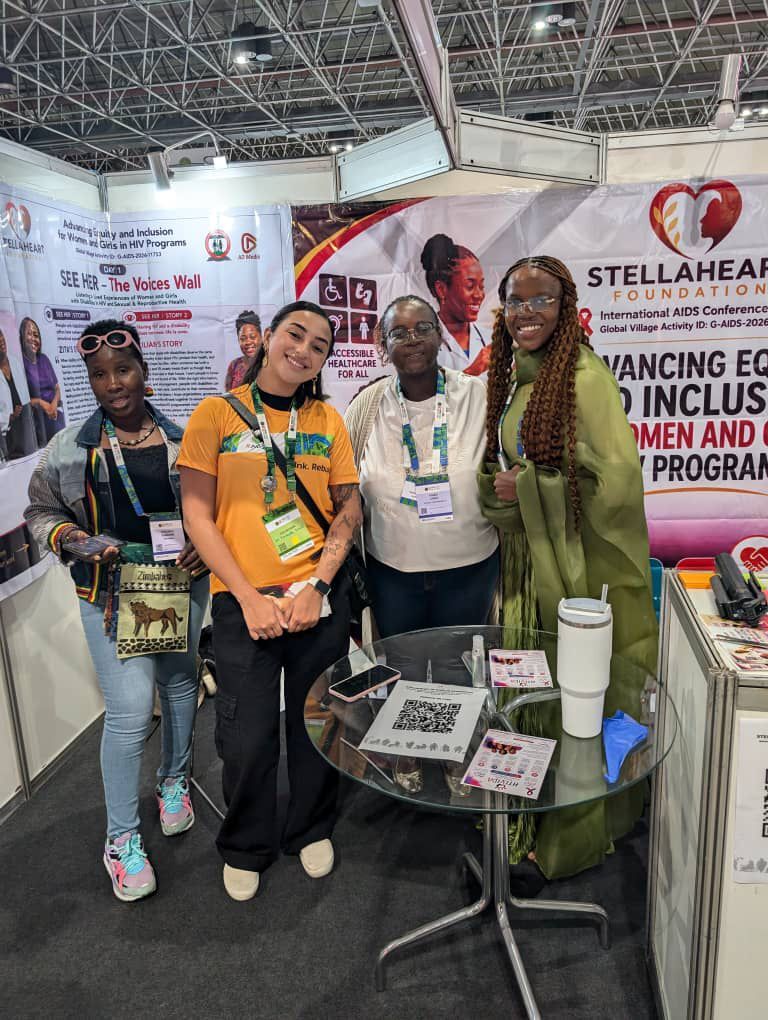
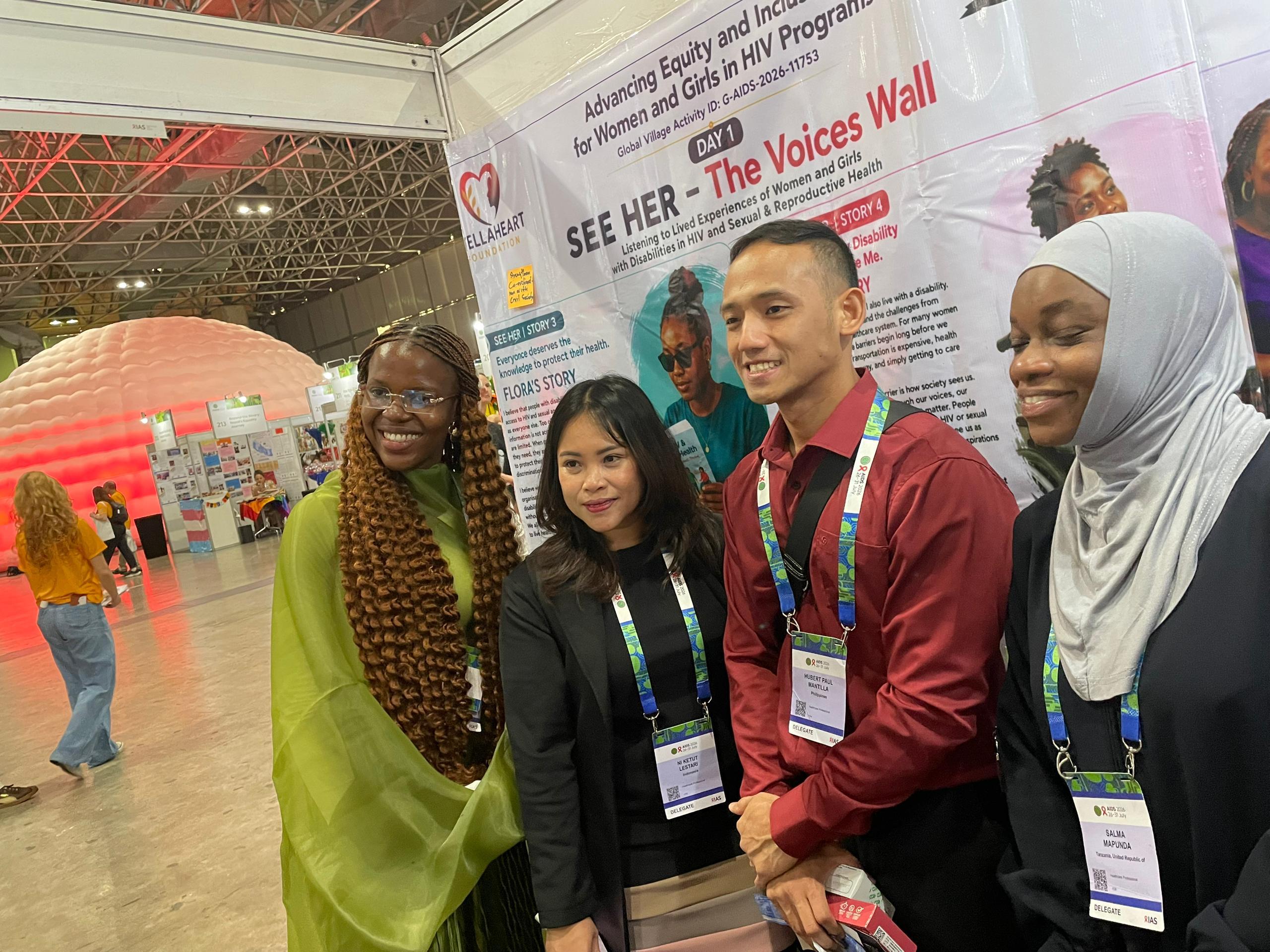
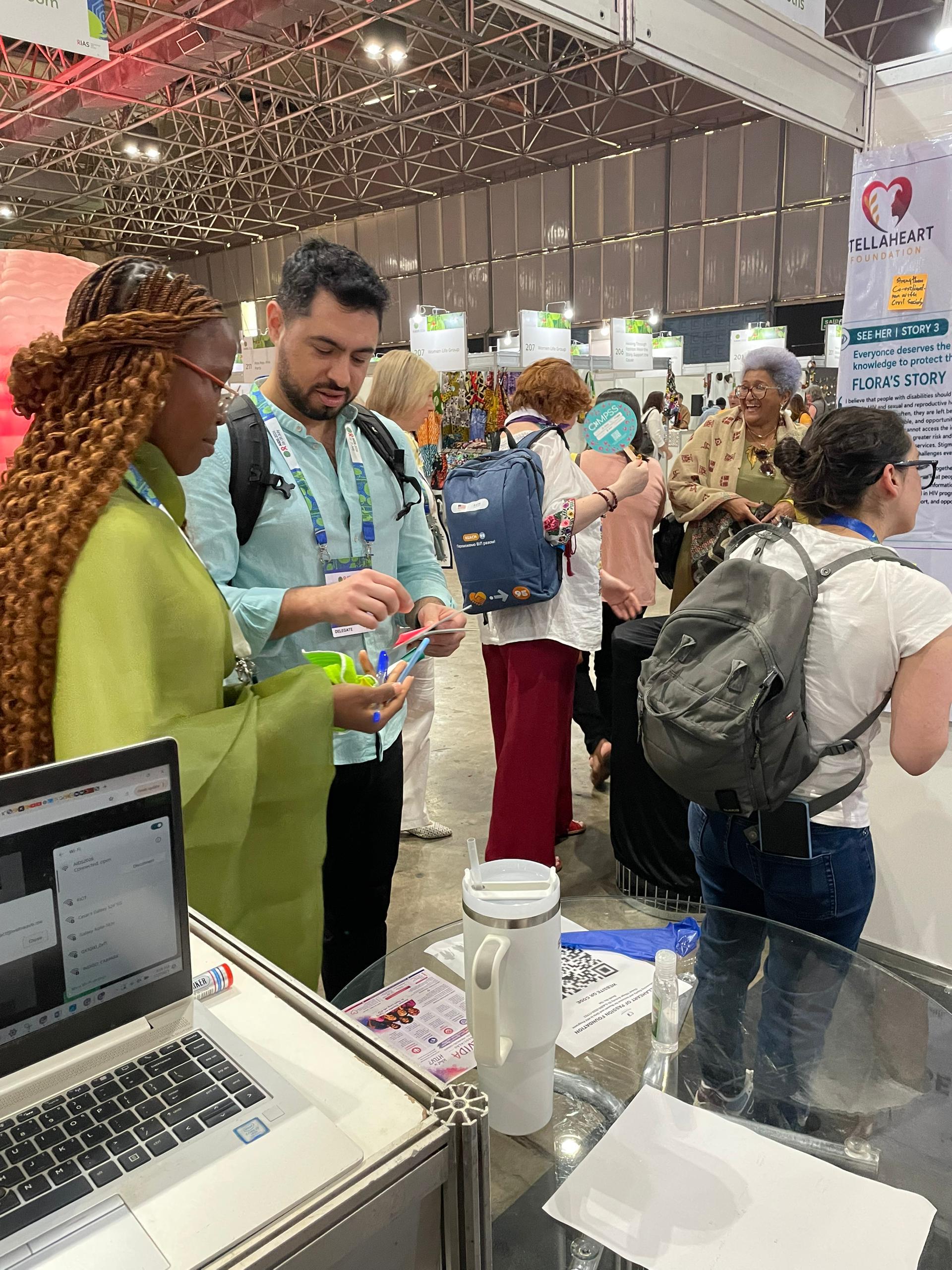
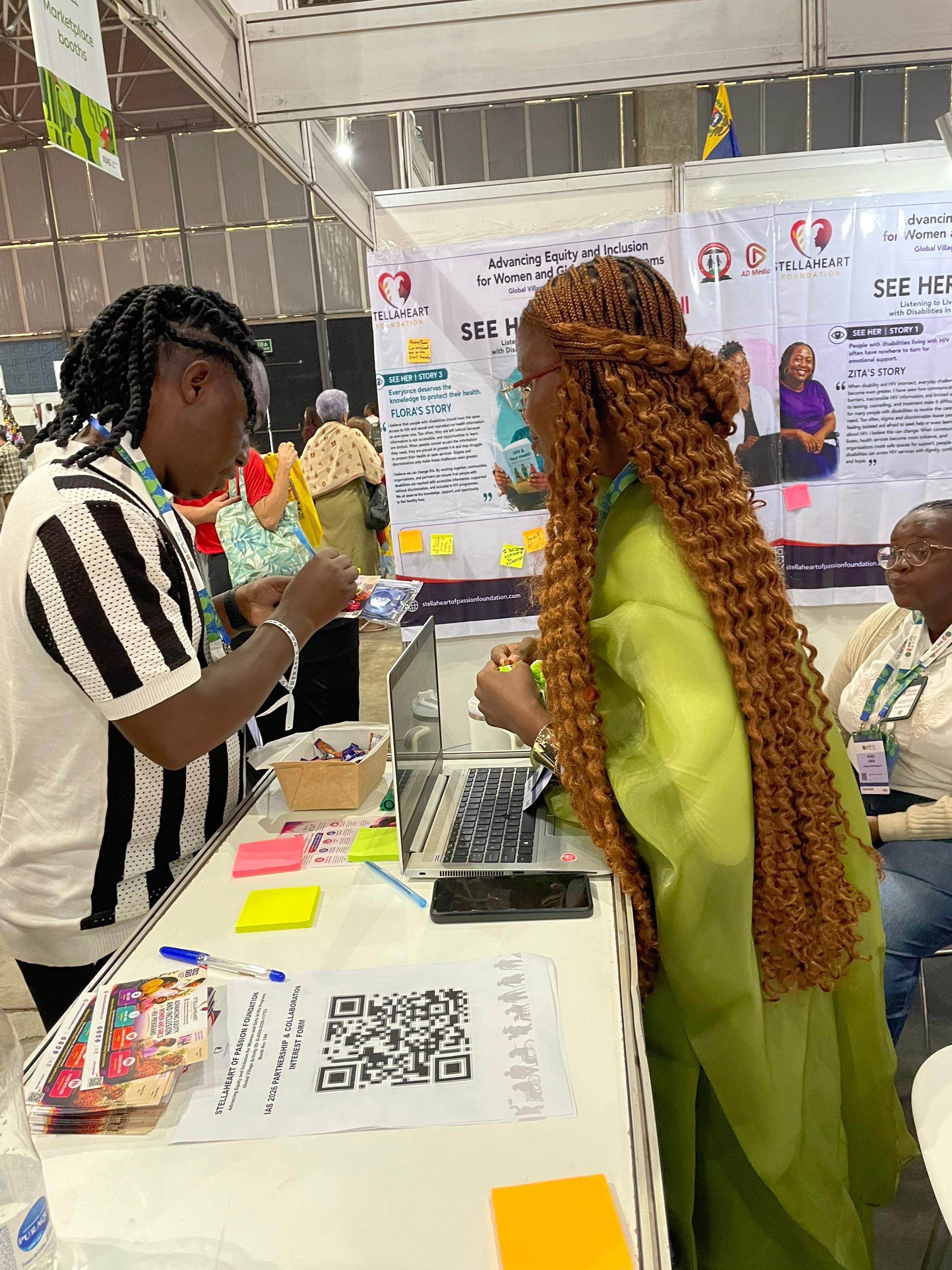
Stellaheart of Passion Foundation created an interactive space where diverse stakeholders could reflect on lived experiences, identify barriers, challenge assumptions, and co-design practical solutions.
The programme focused particularly on women and girls with disabilities, promoting meaningful participation in HIV programme and service design to ensure no one is overlooked within prevention, testing, and care.
Impact at a Glance
* Participants could engage in more than one activity; figures represent engagement touchpoints.
The Five Interactive Activities
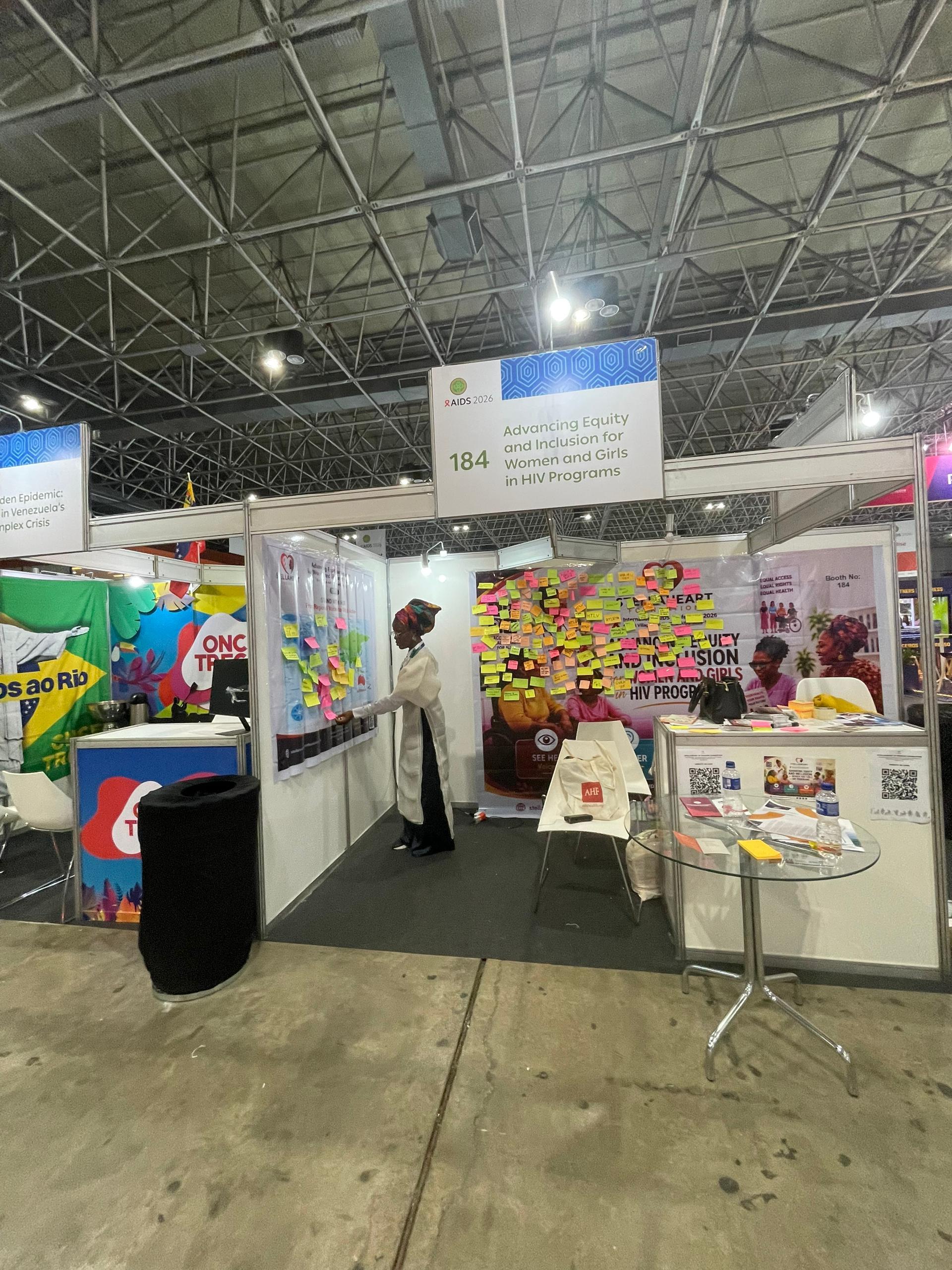
1. SEE HER: Voices Wall
An interactive space where participants responded to lived-experience stories and reflected on visibility, accessibility, and empowerment.
2. HEAR WITH HER
A participatory activity challenging assumptions about disability inclusion across the HIV care continuum through "Myth or Reality" scenarios.
3. DESIGN WITH HER
Co-designing solutions for communication, physical accessibility, digital access, and autonomy in healthcare settings.
4. STAND WITH HER
Identifying regional barriers and mapping out responsibility for driving systemic change in inclusive HIV services.
5. THE IAS HUNT
A "Who is Missing" search identifying populations overlooked within global HIV prevention and care frameworks.
Key Findings
Stigma: Identified as the most frequent barrier to care.
Gaps: Significant physical and digital accessibility barriers.
Communication: Inadequate provider preparedness for diverse needs.
Data: Critical lack of disability-disaggregated data.
Autonomy: Privacy and dignity remain major concerns.
Inclusion: Shared responsibility across all health sectors.
Our Call to Action
Based on stakeholder insights, we have identified seven priorities to transform HIV care for women and girls with disabilities. These represent the roadmap for future advocacy and programme design.
Make HIV information accessible.
Strengthen inclusive provider training.
Improve physical and digital accessibility.
Collect disability-disaggregated data.
Meaningfully involve people with disabilities.
Embed inclusion across the care continuum.
Strengthen collaboration and accountability.
Who is Missing?
Stakeholders identified several populations that remain in the shadows of current HIV service delivery:
Women and girls
Persons with disabilities
LGBTQI+ populations
Older people
Migrant populations
Intersecting vulnerabilities
A Note on Intersectionality: Exclusion is rarely isolated. Participants emphasized that barriers often overlap based on diverse identities and socio-economic circumstances.
“Inclusion must be designed, not assumed.”
Engagement Gallery
Building disability-inclusive HIV services requires intentional design, meaningful participation, and sustained investment. Together, we ensure no woman or girl is left behind.